Top Chef ™: Wisconsin
Season:
Week:
Restaurant Wars, Season 21

The chefs divided into two teams and were given $4,500 per team to equip a restaurant and create food (3 courses, 2 choices per course) for 75 people. plus 8 judges. They had 7 hours, spread over two days, for cooking.

As a family-run site, we pour our hearts into recording and transcribing cooking shows, developing tested recipes, and sharing culinary insights—all without bombarding you with ads.
Your low-cost subscription would help us cover ingredient costs and confirm that our passion project matters to you.
Please join our cooking community today.
Dishes prepared in
Top Chef ™: Wisconsin

Pork Tenderloin a la Talla, Charred Pineapple, Black Bean & Onion Puree
Pork loin with a little bit of pico, and then an emulsion of black beans.

Beef Tenderloin with Mole Negro, Shimeji Mushrooms & Black Garlic
Manny made the beef tenderloin with a mole negro. Shimoji mushrooms on top.

Fried Catfish with Dirty Rice Cake

Rice Cakes, Salsa Verde, Chinese Sausage and Pepita
Chef Mannya; "We made the rice crackers with a little bit of salsa verde and chinese sausage. And we have the shrimp cooked in miso butter and kimchi with jicama."

Miso Butter-Poached Shrimp, Kimchi Jacama and Bok Choy

Melon and Dungeness Crab Aquachile, Pickled Bamboo, Furikake Tostada
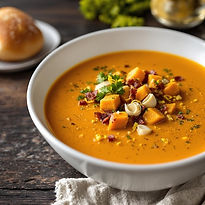
"New England" Clam Chowder - Grilled Carrots with Old Bay, Clams and Thyme
Danny: "I am making my interpretation of a clam chowder, but it's all about the carrots."
"I was this young sous chef, and I kept getting, like, carrot dishes assigned to me. I actually had a book. It was the Carrot Chronicles. It was, like, 15 different carrot recipes in it. You name the way I can tell you the best way to cook a carrot. I love carrots."
Voice-over; "Chef Danny made a play on a New England Clam Chowder but used carrots in place of potatoes. The dish is intended to be very carrot-forward."

Beef Tartare, Cilantro Green Goddess, Gochujang, Rice Cracker

Chawanmushi with Scallop, Maitake, Ikura

Smoked Walleye, Labneh, Potato Cake, Harissa

Vegan Gumbo Z'herbes - Greens, Grilled Mushrooms & Kombu

Honey Custard, Jasmine Tea & Citrus Gelee with Buckwheat Crumble

Maple Cremeux, Blueberry, Pistachio & Caramel

Culinary Challenges inspired by
Top Chef ™: Wisconsin

When making filled mochi, freezing the filling into firm balls before encasing them in dough is the single most important step for clean, professional results. Soft or room-temperature filling deforms under pressure, causing the dough to tear or the filling to break through the seal. Frozen balls hold their shape during the wrapping process, allowing you to seal the dough edges securely and roll each mochi into a perfect sphere without the filling shifting. A minimum of 30 minutes in the freezer is required; the filling balls can be frozen weeks in advance and shaped straight from frozen. The same technique applies to any filled dumpling or dough parcel where precise portioning and clean edges matter.

A vivid green herb oil requires a brief blanching step before blending. Dropping fresh herb leaves into aggressively boiling water for exactly 15 seconds - then immediately transferring to an ice bath - deactivates the enzymes responsible for oxidation, locking the chlorophyll in its bright green state. Without blanching, blended herb oil will turn dull and brownish within hours. After blanching, the herbs must be squeezed completely dry before blending: residual water dilutes the oil and weakens both colour and flavour. Strain the finished oil through a coffee filter without pressing - gravity alone produces the clearest, most brilliant result. The oil can be refrigerated for up to 3 days; colour may fade slightly after 24 hours.

Beef tenderloin is the leanest prime cut - and that leanness is both its virtue and its vulnerability. Massimo's solution on Top Chef ™ Season 22 was to cook the tenderloin fully submerged in herb-infused olive oil held at 160–165°F / 71–74°C. This is close to an olive oil confit but at a slightly higher temperature, working as both a cooking and seasoning mechanism simultaneously: the fat surrounds the meat on all sides throughout cooking, the aromatics season evenly, and the follow-up rest in warm clarified butter deepens the effect further. Massimo called this the 'osmosis effect' - as the beef releases moisture during cooking it absorbs the surrounding fat, transforming the texture of a naturally dry cut into something supple and rich. The key discipline is temperature control: the oil must never exceed 175°F / 80°C or the exterior will overcook before the centre reaches medium-rare.

One of the most distinctive visual and flavour moves in Massimo's winning dish on Top Chef ™ Season 22 was the elderberry umeboshi presented not as a sauce or a smear but as a semi-dehydrated fruit leather draped over the beef. The leather is made by cooking the fruit down with salt, sugar, and acid into a thick jammy purée, sieving out the seeds, spreading the pulp thinly (2–3 mm) on parchment, and drying it in a 170°F / 75°C oven for 1.5–2 hours until the surface is dry but still pliable. The result delivers maximum flavour intensity - concentrated fruit, assertive saltiness, underlying tartness - in a thin, elegant ribbon that reads visually as a dramatic dark stripe across the pink beef. The format is more stable on the plate than a sauce and adds textural contrast that a liquid cannot provide. Any high-pectin berry (blackcurrant, aronia, sloe) can be treated the same way.


Steeping tea in warm cream before making custards or crémeux adds an aromatic dimension that elevates simple sweetness into something more sophisticated. Chef Dan's Earl Grey infusion drew specific praise from the Top Chef judges: "I love the addition of the tea." The technique is straightforward: bring cream to a simmer, remove from heat, add loose-leaf tea, cover, and steep for 10 minutes before straining. The bergamot in Earl Grey provides floral, citrus notes that complement maple, caramel, and stone fruits beautifully. The key is steeping covered to trap volatile aromatics and straining thoroughly to remove leaves that would create bitterness. This technique works with many teas: lapsang souchong adds smokiness, chamomile offers floral sweetness, hojicha brings toasty nuttiness, and jasmine creates delicate perfume. Tea infusion transforms custard bases from one-dimensional to complex without adding ingredients that compete for attention.

When a primary flavor gets lost in a multi-component dessert, the solution requires multiple reinforcement strategies. Tom Colicchio's critique of Dan's maple crémeux—"I'm not getting a whole lot of maple out of it"—is a common challenge when delicate flavors compete with bold supporting elements. The fix comes through layering: increase the primary ingredient (use more maple syrup), add concentrated extract for intensity without extra liquid, and choose the most robust variety available (Grade A Dark or Very Dark maple syrup rather than lighter grades). Each layer reinforces the flavor at different points in the tasting experience. This technique applies broadly: when vanilla gets lost, add both extract and bean paste; when citrus fades, layer zest, juice, and oil; when coffee disappears, add instant espresso to amplify brewed coffee. The judges still "ate every scrap" because Dan's balance was right—the star just needed to shine brighter.

Granita is the simplest frozen dessert to make but requires patient attention over several hours. Unlike ice cream or sorbet, granita relies on manual scraping rather than churning to create its characteristic fluffy ice crystals. Pour your sweetened liquid into a shallow dish (depth matters—shallow freezes faster and more evenly), then freeze until the edges begin to set, about one hour. Use a fork to scrape the frozen edges toward the center, breaking up ice crystals as you go. Return to the freezer and repeat every 30-45 minutes until the entire mixture is fluffy, icy shards—typically 3-4 hours total. The secret is in the scraping: vigorous fork strokes create lighter, fluffier crystals, while gentle scraping yields coarser texture. Always scrape granita fresh just before serving to restore its fluffy texture, as it compacts when stored.

Sabayon is one of the most demanding sauces in the pastry kitchen because it cannot be made ahead—it must be whisked, plated, and served within minutes. The technique involves whisking egg yolks with liquid (wine, beer, or juice) and sweetener over simmering water until the mixture triples in volume, becomes pale and thick, and reaches 160°F. The constant whisking incorporates air while the heat cooks the eggs into a stable foam. But that stability is temporary: remove the whisk and the sabayon begins to deflate; let it cool and it separates. Rasika's honey mustard sabayon pushed this already-demanding technique by adding mustard's oils, which can destabilize emulsions. The solution is to work quickly and have all plating components ready before starting the sabayon. If you must hold it briefly, keep the bowl over barely simmering water and whisk occasionally—but even then, you're racing the clock.
Best dishes in this challenge
Top Chef ™: Wisconsin
Worst dishes in this week of
Top Chef ™: Wisconsin
Featured Recipes from Top Chef ™


