Recipes, re-invented from cooking shows
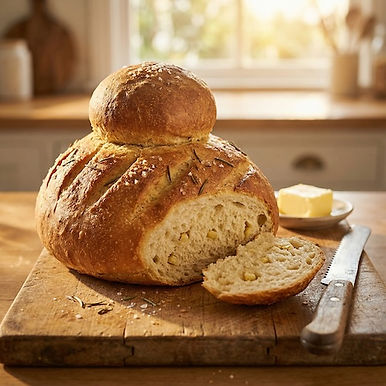
Garlic and Rosemary Cottage Loaf
Prep. Time:
Baking Time:
Total Time:
30 minutes (plus 2-2½ hours proving)
35-40 minutes
Serves:
1 large loaf (serves 8-10)
When 27-year-old Abbi Lawson from Cumbria entered the GBBO tent for Series 14's Bread Week, she brought the spirit of her beloved English countryside with her. A vegetable grower, delivery driver, and passionate forager, Abbi was born in Yorkshire and first learned to bake with her mother as a teena...
Read more
Ingredients
FOR THE COTTAGE LOAF: 4 cups (500g) strong white bread flour 2 teaspoons (10g) fine sea salt 2¼ teaspoons SAF red instant yeast 1¼ cups + 2 tablespoons (330ml) lukewarm water (105-110°F) 3½ tablespoons (50g) lard or vegetable shortening, softened
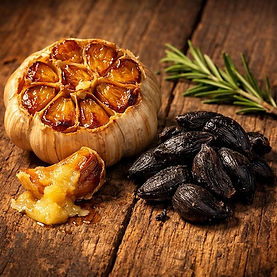
FOR THE SMOKED GARLIC AND ROSEMARY FLAVORING: 3-4 smoked garlic cloves, minced (about 15g) 1 head regular garlic, roasted and mashed 2 tablespoons fresh rosemary, finely chopped 1 tablespoon extra virgin olive oil ½ teaspoon flaky sea salt ¼ teaspoon freshly cracked black pepper
FOR THE FINISH: 1 egg beaten with 1 tablespoon water 3-4 small fresh rosemary sprigs Pinch flaky sea salt
Method
ROAST THE GARLIC (CAN BE DONE AHEAD): Preheat oven to 400°F (200°C). Slice the top off a whole head of garlic to expose the cloves. Place on foil, drizzle with olive oil, wrap tightly, and roast for 35-40 minutes until soft and caramelized. Squeeze out the soft cloves and mash to a paste. This mellows the garlic and adds sweetness that balances the intense smoked garlic.
MAKE THE DOUGH: In a large bowl or stand mixer bowl, combine the flour, salt, and instant yeast. Critical: Ensure the salt is well distributed throughout the flour before adding liquid—adequate salt is essential for both flavor and gluten structure.
Rub the softened lard into the flour mixture with your fingertips until it resembles fine breadcrumbs. Lard is traditional for cottage loaves and creates a tender crumb.
In a small bowl, combine the minced smoked garlic, roasted garlic paste, chopped rosemary, olive oil, and the ½ teaspoon flaky salt. Mix well. The roasted garlic tempers the intensity of the smoked garlic, preventing it from overwhelming the loaf.
Make a well in the center of the flour mixture and add the lukewarm water and garlic-rosemary mixture. Using a wooden spoon or dough hook on low speed, bring together until a shaggy dough forms.
Turn out onto a lightly floured surface and knead for 10-12 minutes by hand (or 8 minutes on medium speed in a stand mixer). The dough should become smooth, elastic, and slightly tacky but not sticky. It should spring back when poked.
Perform the windowpane test—stretch a small piece of dough gently between your fingers. If it stretches thin enough to see light through without tearing, the gluten is properly developed.
FIRST PROVE: Form the dough into a smooth ball by tucking the edges underneath. Place in a lightly oiled bowl, turning to coat. Cover with a damp kitchen towel or plastic wrap.
Let rise in a warm, draft-free spot until doubled in size, about 1-1½ hours. The ideal temperature is 75-80°F (24-27°C).
Gently poke the dough with a floured finger. If the indentation springs back slowly and partially, it's ready.
SHAPE THE COTTAGE LOAF: Gently punch down the risen dough to release air. Turn out onto a lightly floured surface. Divide into two pieces—one about twice the size of the other (roughly ⅔ and ⅓).
Shape each piece into a smooth, tight ball by cupping your hand over the dough and rotating it on the work surface, tucking the edges underneath to create surface tension.
Place the larger ball on a parchment-lined baking sheet. Flatten the top very slightly. Position the smaller ball directly on top, centered. Let rest for 5 minutes.
Using two floured fingers or the floured handle of a wooden spoon, press straight down through the center of both balls until you nearly reach the baking sheet. This creates the characteristic indentation and helps the two parts bake as one while maintaining their distinct shapes. Press firmly and decisively.
Using a sharp knife held at an angle, make 6-8 shallow diagonal cuts around the sides of both portions.
SECOND PROVE: Cover loosely with a damp kitchen towel or oiled plastic wrap. Let prove for 45 minutes to 1 hour, until increased by about 50% and puffy but not overblown. Critical: Do not overprove.
During the final 20 minutes, preheat oven to 425°F (220°C). Place an empty roasting pan on the bottom rack.
BAKE THE LOAF: Gently brush the entire loaf with egg wash. Press rosemary sprigs decoratively into the top and sprinkle with flaky salt.
Pour ½ cup hot water into the preheated roasting pan to create steam.
Bake on the middle rack for 15 minutes at 425°F. Reduce to 375°F (190°C) and continue for 20-25 more minutes, until deep golden brown and hollow-sounding when tapped. Internal temperature should reach 200-210°F.
Transfer to a wire rack and cool for at least 30 minutes before slicing.
What next?
Tell us what you'd like and we'll send what you pick.
Video walkthrough

See our simpler recipe, ideal for use in a home kitchen
Printable recipe
Weekly recipe digest
Instructions
ROAST THE GARLIC (CAN BE DONE AHEAD):
Preheat oven to 400°F (200°C). Slice the top off a whole head of garlic to expose the cloves. Place on foil, drizzle with olive oil, wrap tightly, and roast for 35-40 minutes until soft and caramelized. Squeeze out the soft cloves and mash to a paste. This mellows the garlic and adds sweetness that balances the intense smoked garlic.
MAKE THE DOUGH:
In a large bowl or stand mixer bowl, combine the flour, salt, and instant yeast. Critical: Ensure the salt is well distributed throughout the flour before adding liquid—adequate salt is essential for both flavor and gluten structure.
Rub the softened lard into the flour mixture with your fingertips until it resembles fine breadcrumbs. Lard is traditional for cottage loaves and creates a tender crumb.
In a small bowl, combine the minced smoked garlic, roasted garlic paste, chopped rosemary, olive oil, and the ½ teaspoon flaky salt. Mix well. The roasted garlic tempers the intensity of the smoked garlic, preventing it from overwhelming the loaf.
Make a well in the center of the flour mixture and add the lukewarm water and garlic-rosemary mixture. Using a wooden spoon or dough hook on low speed, bring together until a shaggy dough forms.
Turn out onto a lightly floured surface and knead for 10-12 minutes by hand (or 8 minutes on medium speed in a stand mixer). The dough should become smooth, elastic, and slightly tacky but not sticky. It should spring back when poked.
Perform the windowpane test—stretch a small piece of dough gently between your fingers. If it stretches thin enough to see light through without tearing, the gluten is properly developed.
FIRST PROVE:
Form the dough into a smooth ball by tucking the edges underneath. Place in a lightly oiled bowl, turning to coat. Cover with a damp kitchen towel or plastic wrap.
Let rise in a warm, draft-free spot until doubled in size, about 1-1½ hours. The ideal temperature is 75-80°F (24-27°C).
Gently poke the dough with a floured finger. If the indentation springs back slowly and partially, it's ready.
SHAPE THE COTTAGE LOAF:
Gently punch down the risen dough to release air. Turn out onto a lightly floured surface. Divide into two pieces—one about twice the size of the other (roughly ⅔ and ⅓).
Shape each piece into a smooth, tight ball by cupping your hand over the dough and rotating it on the work surface, tucking the edges underneath to create surface tension.
Place the larger ball on a parchment-lined baking sheet. Flatten the top very slightly. Position the smaller ball directly on top, centered. Let rest for 5 minutes.
Using two floured fingers or the floured handle of a wooden spoon, press straight down through the center of both balls until you nearly reach the baking sheet. This creates the characteristic indentation and helps the two parts bake as one while maintaining their distinct shapes. Press firmly and decisively.
Using a sharp knife held at an angle, make 6-8 shallow diagonal cuts around the sides of both portions.
SECOND PROVE:
Cover loosely with a damp kitchen towel or oiled plastic wrap. Let prove for 45 minutes to 1 hour, until increased by about 50% and puffy but not overblown. Critical: Do not overprove.
During the final 20 minutes, preheat oven to 425°F (220°C). Place an empty roasting pan on the bottom rack.
BAKE THE LOAF:
Gently brush the entire loaf with egg wash. Press rosemary sprigs decoratively into the top and sprinkle with flaky salt.
Pour ½ cup hot water into the preheated roasting pan to create steam.
Bake on the middle rack for 15 minutes at 425°F. Reduce to 375°F (190°C) and continue for 20-25 more minutes, until deep golden brown and hollow-sounding when tapped. Internal temperature should reach 200-210°F.
Transfer to a wire rack and cool for at least 30 minutes before slicing.




Heading 5
Ingredients
FOR THE COTTAGE LOAF:
4 cups (500g) strong white bread flour
2 teaspoons (10g) fine sea salt
2¼ teaspoons SAF red instant yeast
1¼ cups + 2 tablespoons (330ml) lukewarm water (105-110°F)
3½ tablespoons (50g) lard or vegetable shortening, softened
FOR THE SMOKED GARLIC AND ROSEMARY FLAVORING:
3-4 smoked garlic cloves, minced (about 15g)
1 head regular garlic, roasted and mashed
2 tablespoons fresh rosemary, finely chopped
1 tablespoon extra virgin olive oil
½ teaspoon flaky sea salt
¼ teaspoon freshly cracked black pepper
FOR THE FINISH:
1 egg beaten with 1 tablespoon water
3-4 small fresh rosemary sprigs
Pinch flaky sea salt
Comments, or questions, for this recipe
Add a new comment