Recipes, re-invented from cooking shows
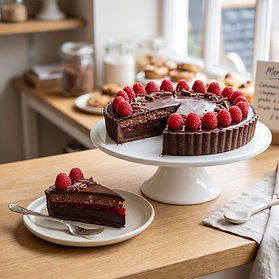
Raspberry Triple Chocolate Layered Tart

Prep. Time:
Baking Time:
Total Time:
1 hour 30 minutes
45 minutes
6 hours (including setting)
Serves:
1 tart (23 cm / 9 in), 10–12 slices
Stuart Marston-Smith created this dish for Great British Bake Off ™ Series 3. His Tarts-week showstopper stacked three clean bands of dark, milk and white chocolate over a sharp fresh-raspberry jelly and a macadamia praline crunch, winning praise from Mary Berry and Paul Hollywood for its legible la...
Read more
Ingredients
FOR THE CHOCOLATE PASTRY (PÂTE SUCRÉE):
220 g plain (all-purpose) flour, plus extra to dust
25 g cocoa powder, unsweetened (Dutch-process preferred)
65 g icing (powdered) sugar, sifted
1 pinch fine salt
140 g cold unsalted butter, cubed and kept cold
1 large egg yolk, cold
15–30 ml (1–2 tbsp) cold water, only as needed to bind
FOR THE MACADAMIA PRALINE CRUNCH:
100 g granulated sugar (for the praline)
30 ml (2 tbsp) water (for the praline)
100 g macadamia nuts, toasted
50 g light brown sugar (for the crumble)
40 g plain flour (for the crumble)
40 g cold butter (for the crumble)
4–5 fortune cookies, crushed to shards
60 g milk chocolate, melted (to bind the crunch)
FOR THE FRESH RASPBERRY JELLY:
2 gelatine leaves (platinum; or 1 tsp powdered)
250 g fresh raspberries (or frozen, thawed)
50 g granulated sugar, to taste
15 ml (1 tbsp) lemon juice
FOR THE DARK CHOCOLATE CREMEUX (LAYER 1):
2 egg yolks
25 g granulated sugar
120 ml whole milk
120 ml double (heavy) cream
150 g dark chocolate (70%), finely chopped
FOR THE MILK CHOCOLATE MOUSSE (LAYER 2):
1 gelatine leaf, bloomed
150 g milk chocolate, chopped
180 ml double (heavy) cream, softly whipped
FOR THE WHITE CHOCOLATE MOUSSE (LAYER 3):
1 gelatine leaf bloomed
150 g Premium White Chocolate Chips, chopped
180 ml double (heavy) cream, softly whipped
TO FINISH:
125 g fresh raspberries
60 g dark chocolate, for curls / shards
Gold lustre or cocoa, to dust
EQUIPMENT:
23 cm (9 in) loose-bottomed fluted tart tin, 3.5 cm deep
Food processor and digital scale
Double boiler / heatproof bowls for a bain-marie
Small saucepan
Hand or stand mixer
Offset spatula / palette knife
Acetate collar strip (optional, for clean sides)
Piping bag (optional, for the top layer)
Method
STEP 1: MAKE THE CHOCOLATE PASTRY
Pulse the flour, cocoa, icing sugar and salt in a food processor. Add the cold cubed butter and pulse in short bursts only until the mix looks like damp sand, stopping the moment it does. Add the yolk and one tablespoon of cold water, then pulse just until the dough starts to clump, adding the second tablespoon only if it stays dry. Tip onto the bench and bring together with two or three light presses — no kneading. Cocoa pastry has little gluten to bind it, so over-working (and over-flouring at the rolling stage) is exactly what leaves it crumbly. Flatten to a disc, wrap, and chill 30–60 minutes.
STEP 2: LINE, CHILL AND BLIND-BAKE THE SHELL
Roll the pastry between two sheets of parchment (so you barely need extra flour) to about 3–4 mm. Line the tin, easing it into the flutes without stretching, and patch any tears with off-cuts — a short dough is meant to be patched, not fought. Trim, prick the base, and chill 20 minutes. Line with parchment and baking beans, then bake at 180°C (350°F) for 15 minutes; remove the beans and bake a further 8–10 minutes until the base is dry and set. While still warm, brush the inside with a little melted milk chocolate to seal it against the layers to come. Cool completely.
STEP 3: BUILD THE MACADAMIA PRALINE CRUNCH
For the praline, boil the granulated sugar and water to a clean amber (about 170°C/340°F), swirling but not stirring once it boils; stir in the toasted macadamias, tip onto parchment, cool, then blitz to a coarse rubble. For the crumble, rub the light brown sugar, flour and cold butter to clumps and bake at 180°C (350°F) for 10–12 minutes until sandy, then cool. Fold the praline rubble, crumble and crushed fortune cookies through the remaining melted milk chocolate, just enough to bind. Press an even layer into the base of the cooled shell and chill to firm.
STEP 4: SET THE FRESH RASPBERRY JELLY
Soften the gelatine in cold water. Warm the raspberries, sugar and lemon juice until collapsed, then push through a fine sieve to remove the seeds. Reheat the seedless purée until steaming (not boiling), whisk in the squeezed gelatine until dissolved, and cool to barely warm. Pour a thin, even layer over the set crunch and chill until fully set — this sharp ribbon is the acidity that cuts the chocolate.
STEP 5: LAYER 1 — DARK CHOCOLATE CREMEUX
Make a thin custard: whisk the egg yolks and sugar, warm the milk and cream, temper together and cook gently to 80°C (175°F), stirring, until it lightly coats the spoon. Pour through a sieve over the chopped dark chocolate, leave a minute, then emulsify to a glossy cremeux. Cool to just-pourable and spread over the set jelly. Chill until firm before the next layer — setting each band fully is what keeps the cut clean.
STEP 6: LAYER 2 — MILK CHOCOLATE MOUSSE
Bloom the gelatine. Melt the milk chocolate and cool slightly. Warm a splash of the cream, dissolve the squeezed gelatine in it, then stir into the chocolate. Fold in the softly whipped cream in two additions to keep it airy. Spread gently over the firm dark layer, level, and chill until set.
STEP 7: LAYER 3 — WHITE CHOCOLATE MOUSSE
Repeat the mousse method with the white chocolate, which is softer, so keep it cool and don't over-whip the cream. Spread — or pipe — over the milk layer for the palest, top band. Smooth flat with a warm offset spatula and chill until the whole tart is completely set, ideally 2 hours or overnight.
STEP 8: FINISH AND SERVE
Unmould carefully (a warm cloth around the tin helps). Crown with fresh raspberries, dark chocolate curls or shards, and the faintest dust of cocoa or gold lustre. Wipe the plate, slice with a hot, dry knife, and you should see three chocolates and the jewel of jelly in clean, deliberate bands.
What next?
Tell us what you'd like and we'll send what you pick.
Video walkthrough

Simpler recipe version
Printable recipe
Weekly recipe digest
Instructions
FOR THE CHOCOLATE PASTRY (PÂTE SUCRÉE):
220 g plain (all-purpose) flour, plus extra to dust
25 g cocoa powder, unsweetened (Dutch-process preferred)
65 g icing (powdered) sugar, sifted
1 pinch fine salt
140 g cold unsalted butter, cubed and kept cold
1 large egg yolk, cold
15–30 ml (1–2 tbsp) cold water, only as needed to bind
FOR THE MACADAMIA PRALINE CRUNCH:
100 g granulated sugar (for the praline)
30 ml (2 tbsp) water (for the praline)
100 g macadamia nuts, toasted
50 g light brown sugar (for the crumble)
40 g plain flour (for the crumble)
40 g cold butter (for the crumble)
4–5 fortune cookies, crushed to shards
60 g milk chocolate, melted (to bind the crunch)
FOR THE FRESH RASPBERRY JELLY:
2 gelatine leaves (platinum; or 1 tsp powdered)
250 g fresh raspberries (or frozen, thawed)
50 g granulated sugar, to taste
15 ml (1 tbsp) lemon juice
FOR THE DARK CHOCOLATE CREMEUX (LAYER 1):
2 egg yolks
25 g granulated sugar
120 ml whole milk
120 ml double (heavy) cream
150 g dark chocolate (70%), finely chopped
FOR THE MILK CHOCOLATE MOUSSE (LAYER 2):
1 gelatine leaf, bloomed
150 g milk chocolate, chopped
180 ml double (heavy) cream, softly whipped
FOR THE WHITE CHOCOLATE MOUSSE (LAYER 3):
1 gelatine leaf, bloomed
150 g white chocolate, chopped
180 ml double (heavy) cream, softly whipped
TO FINISH:
125 g fresh raspberries
60 g dark chocolate, for curls / shards
Gold lustre or cocoa, to dust
EQUIPMENT:
23 cm (9 in) loose-bottomed fluted tart tin, 3.5 cm deep
Food processor and digital scale
Sugar thermometer
Baking beans
Fine-mesh sieve
Double boiler / heatproof bowls for a bain-marie
Parchment paper
Small saucepan
Hand or stand mixer
Offset spatula / palette knife
Acetate collar strip (optional, for clean sides)
Piping bag (optional, for the top layer)


Heading 5
Ingredients
STEP 1: MAKE THE CHOCOLATE PASTRY
Pulse the flour, cocoa, icing sugar and salt in a food processor. Add the cold cubed butter and pulse in short bursts only until the mix looks like damp sand, stopping the moment it does. Add the yolk and one tablespoon of cold water, then pulse just until the dough starts to clump, adding the second tablespoon only if it stays dry. Tip onto the bench and bring together with two or three light presses — no kneading. Cocoa pastry has little gluten to bind it, so over-working (and over-flouring at the rolling stage) is exactly what leaves it crumbly. Flatten to a disc, wrap, and chill 30–60 minutes.
STEP 2: LINE, CHILL AND BLIND-BAKE THE SHELL
Roll the pastry between two sheets of parchment (so you barely need extra flour) to about 3–4 mm. Line the tin, easing it into the flutes without stretching, and patch any tears with off-cuts — a short dough is meant to be patched, not fought. Trim, prick the base, and chill 20 minutes. Line with parchment and baking beans, then bake at 180°C (350°F) for 15 minutes; remove the beans and bake a further 8–10 minutes until the base is dry and set. While still warm, brush the inside with a little melted milk chocolate to seal it against the layers to come. Cool completely.
STEP 3: BUILD THE MACADAMIA PRALINE CRUNCH
For the praline, boil the granulated sugar and water to a clean amber (about 170°C/340°F), swirling but not stirring once it boils; stir in the toasted macadamias, tip onto parchment, cool, then blitz to a coarse rubble. For the crumble, rub the light brown sugar, flour and cold butter to clumps and bake at 180°C (350°F) for 10–12 minutes until sandy, then cool. Fold the praline rubble, crumble and crushed fortune cookies through the remaining melted milk chocolate, just enough to bind. Press an even layer into the base of the cooled shell and chill to firm.
STEP 4: SET THE FRESH RASPBERRY JELLY
Soften the gelatine in cold water. Warm the raspberries, sugar and lemon juice until collapsed, then push through a fine sieve to remove the seeds. Reheat the seedless purée until steaming (not boiling), whisk in the squeezed gelatine until dissolved, and cool to barely warm. Pour a thin, even layer over the set crunch and chill until fully set — this sharp ribbon is the acidity that cuts the chocolate.
STEP 5: LAYER 1 — DARK CHOCOLATE CREMEUX
Make a thin custard: whisk the egg yolks and sugar, warm the milk and cream, temper together and cook gently to 80°C (175°F), stirring, until it lightly coats the spoon. Pour through a sieve over the chopped dark chocolate, leave a minute, then emulsify to a glossy cremeux. Cool to just-pourable and spread over the set jelly. Chill until firm before the next layer — setting each band fully is what keeps the cut clean.
STEP 6: LAYER 2 — MILK CHOCOLATE MOUSSE
Bloom the gelatine. Melt the milk chocolate and cool slightly. Warm a splash of the cream, dissolve the squeezed gelatine in it, then stir into the chocolate. Fold in the softly whipped cream in two additions to keep it airy. Spread gently over the firm dark layer, level, and chill until set.
STEP 7: LAYER 3 — WHITE CHOCOLATE MOUSSE
Repeat the mousse method with the white chocolate, which is softer, so keep it cool and don't over-whip the cream. Spread — or pipe — over the milk layer for the palest, top band. Smooth flat with a warm offset spatula and chill until the whole tart is completely set, ideally 2 hours or overnight.
STEP 8: FINISH AND SERVE
Unmould carefully (a warm cloth around the tin helps). Crown with fresh raspberries, dark chocolate curls or shards, and the faintest dust of cocoa or gold lustre. Wipe the plate, slice with a hot, dry knife, and you should see three chocolates and the jewel of jelly in clean, deliberate bands.
Comments, or questions, for this recipe
Add a new comment